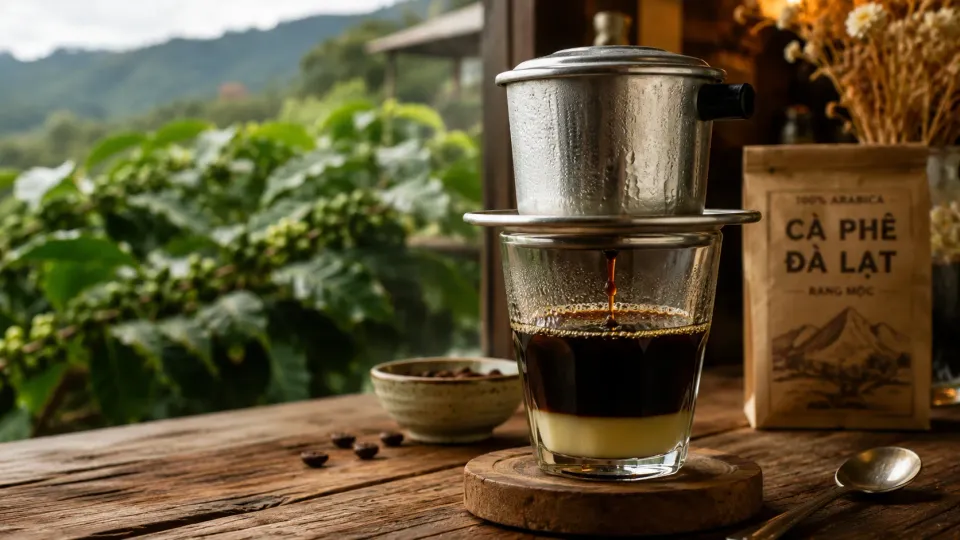
Quick Takeaway: Dalat’s coffee culture dates back to French colonialism in the 1860s. The city’s 1,500m elevation creates ideal growing conditions. Must-try experiences include egg coffee, salt coffee, and a visit to a K’Ho Coffee cooperative farm. Peak harvest season is October-March.
Vietnam is the world’s second-largest coffee producer, and Dalat sits at the heart of its coffee revolution. At 1,500 meters above sea level, the city’s cool climate and volcanic soil produce some of the country’s finest Arabica beans — a stark contrast to the Robusta that dominates the lowland plantations.
Highland Origins
Coffee arrived in Vietnam during French colonial rule in the 1860s, but it was the highlands around Dalat that proved ideal for growing Arabica. The altitude, combined with temperatures between 14°C and 23°C and annual rainfall of about 1,800mm, creates conditions similar to Ethiopia and Colombia where the world’s best coffee originates.
Today, the Lam Dong province surrounding Dalat produces a significant portion of Vietnam’s Arabica output, with farms scattered across the hillsides between 1,000 and 1,500 meters elevation.
The Third Wave
A new generation of Vietnamese baristas and roasters are transforming Dalat’s coffee scene. Specialty cafes now serve single-origin pour-overs alongside traditional Vietnamese preparations. Roasters like Q Coffee Roastery and Thuys Artisan Coffee source beans directly from local farms, roast in small batches, and brew with precision.
The contrast is part of the charm. You might sit next to someone sipping a meticulously prepared V60 pour-over while another customer enjoys cà phê sữa đá — iced coffee with sweetened condensed milk — in the traditional southern Vietnamese style.
Coffee Farm Experiences
Several farms in the Dalat area offer tours where visitors can learn about coffee production from bean to cup. The Lam Dong Coffee Museum provides historical context on how the French introduced coffee cultivation to the region and how it evolved through the 20th century.
The K’Ho Coffee cooperative, run by the indigenous K’Ho people, offers farm-to-cup experiences that highlight both the agricultural process and the cultural significance of coffee to highland communities. Visitors can pick cherries, process beans, and taste different roast levels.
Must-Try Varieties
Egg coffee (cà phê trứng) — A Hanoi invention that has found a home in Dalat. Strong coffee is mixed with whipped egg yolk and condensed milk, creating a rich, custard-like drink.
Weasel coffee (cà phê chồn) — The rarest and most expensive variety. Coffee cherries are eaten by civets, fermented in their digestive tract, and then collected and roasted. The process produces a smooth, less acidic cup with complex flavors. Authentic weasel coffee costs $100–200 per kilogram.
Artichoke tea (trà atisô) — Not technically coffee, but Dalat’s signature drink. Made from locally grown artichokes, it’s served hot or cold and is believed to have health benefits. You’ll find it at virtually every cafe and market in the city.
Avocado coffee (cà phê bơ) — A Dalat specialty blending strong coffee with fresh avocado, condensed milk, and ice. Creamy, sweet, and uniquely local.
When to Visit
Coffee harvesting in the Dalat region typically runs from October to March, with the peak season in December and January. Visiting during harvest lets you see the farms at their busiest and taste the freshest beans. The dry season (November to April) is also the best time for cafe-hopping without rain interruptions.
Related Places & Guides
Frequently Asked Questions
What makes Dalat coffee different from other Vietnamese coffee?
Dalat's 1,500-meter elevation produces Arabica beans, which are milder and more complex than the Robusta that dominates Vietnam's lowland plantations. The cool climate, volcanic soil, and altitude create flavor profiles similar to Colombian or Ethiopian coffee — fruity, aromatic, and less bitter.
What is egg coffee and where can I try it?
Egg coffee (cà phê trứng) is a Hanoi invention made by whipping egg yolk with condensed milk into a rich, custard-like foam over strong black coffee. In Dalat, you'll find it at most specialty cafes. Coffee Em Va Trinh and several spots around the Central Market serve excellent versions.
Can I visit a coffee farm in Dalat?
Yes — several farms in the Dalat area offer tours. The K'Ho Coffee cooperative, run by the indigenous K'Ho people, offers farm-to-cup experiences where you can pick cherries, process beans, and taste different roast levels. The Lam Dong Coffee Museum also provides historical context on the region's coffee heritage.
How much does a cup of specialty coffee cost in Dalat?
A cup of specialty pour-over at a local cafe costs $1–3, while traditional Vietnamese coffee (cà phê sữa đá) is $0.50–1.50. Weasel coffee, the rarest variety, can cost $10–20 per cup due to its labor-intensive production process.
What's the best coffee souvenir to bring home?
Local Arabica beans from small-batch roasters like Q Coffee Roastery are the best souvenirs — fresh, locally sourced, and far superior to mass-produced Vietnamese coffee. Artichoke tea is another popular local product. Both are widely available at Dalat Market and specialty shops.